Homepage
News
Dmitry Trenin: Russia and the EU drift toward an u...
Dmitry Trenin: Russia and the EU drift toward an undeclared war
17 January 2026, 08:15
A cautious forecast of what international relations will look like in 2026
Experience shows that making predictions even a year ahead is risky. Events that later seem obvious can be invisible in advance. Yet trying to identify the main trends shaping world politics remains worthwhile. So, what will the international system look like in 2026?
Ukraine: The war will not end
A peace agreement on Ukraine that would satisfy Russia is unlikely in 2026. Western European ruling elites, supported by the US Democratic Party and what is often called the ‘deep state’, will likely block Donald Trump’s efforts to reach a settlement acceptable to Moscow. Moreover, Trump himself may harden his position for domestic political reasons: tightening sanctions on energy exports and stepping up measures against the alleged Russian ‘shadow fleet’.
Under such conditions, the Kremlin’s ‘special diplomatic operation’, ongoing since early 2025, may have to be curtailed, while the military operation continues with renewed intensity.
Fighting will likely persist throughout 2026. Russian forces will continue advancing and may reclaim additional parts of the Donetsk People’s Republic and Zaporozhye Region that remain under Ukrainian control. Russia will expand buffer zones in the Kharkov and Sumy directions, with possible advances elsewhere.
The Ukrainian Armed Forces will be forced to retreat. But EU military and financial support, combined with expanded mobilization inside Ukraine, will allow Kiev to stabilize the front and prevent collapse.
At the same time, the conflict will become more brutal. A desperate adversary is likely to attempt bloody provocations intended to destabilize Russian society psychologically. Moscow’s restraint – guided by the principle “we are at war with the regime, not the people” – may be interpreted in Kiev not as moral discipline, but as weakness. This will encourage increasingly daring actions, forcing Russia to abandon certain taboos.
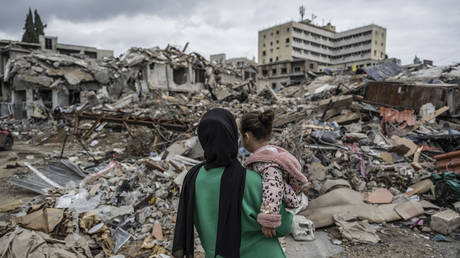
The theater of confrontation will also broaden beyond Ukraine and Russia. Anonymous attacks on tankers carrying Russian oil, as well as strikes deep behind enemy lines, will likely be met with covert retaliatory sabotage against European states participating in the proxy war against Russia. Joint actions by Ukrainians and Western Europeans could have more serious consequences, provoking responses beyond Ukrainian territory. The undeclared Russia-EU war will intensify, though a direct, large-scale military clash remains unlikely in 2026.
Kiev: Regime continuity, possible leadership change
The current regime in Kiev will likely remain in place through 2026. But a change of leadership is possible. Zelensky could be forced out through a corruption scandal or political maneuvering. In that scenario he may be replaced by a heavyweight such as General Valery Zaluzhny. Or, more likely, by Kirill Budanov, who is on Russia’s list of terrorists and extremists but is considered more flexible.
Ukraine will come under even deeper Western European control. Conditions inside the country will continue to worsen, though the population will not yet experience a mass ‘sobering-up’. The most active part of Ukrainian society remains sharply anti-Russian.
The West of Europe: Liberal globalism, but limited capacity
Western Europe will remain a stronghold of liberal globalism. Despite growing unpopularity, the governments of Britain, Germany and France will likely manage to stay in power through 2026. The ‘change of elites’ that some believe necessary for normalization with Russia will not happen soon, if it happens at all.
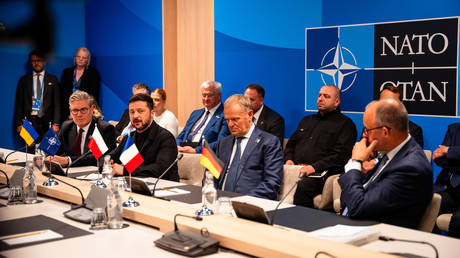
The EU are UK are not preparing for war with Russia in the classic sense. Rather, they are preparing for a long military confrontation modelled on the Cold War. This confrontation, framed as defending “European freedom and civilization from Russian barbarism,” has already become the EU’s principal unifying narrative. It will likely endure through 2026.
Yet Western Europe’s practical militarization will probably lag behind last year’s grand declarations. EU states face fiscal constraints. They must compensate for Washington’s unwillingness to fund Ukraine directly. And governments know that cutting social spending sharply risks voter revolt. These realities will restrain militaristic zeal.
The ‘dissidence’ inside the EU – spanning much of the old Austro-Hungarian space – will persist, whatever the outcome of Hungary’s spring elections. But its influence will remain limited.
More important is America’s evolving geopolitical reorientation toward the Western Hemisphere and East Asia. Washington’s skepticism about EU integration and NATO enlargement could create a leadership vacuum in Europe, exposing contradictions between European states that were long suppressed but never resolved.
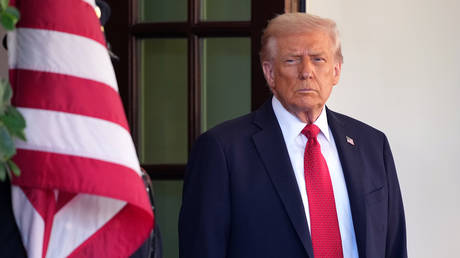
The United States will celebrate the 250th anniversary of independence in 2026, hosting the G20 summit and the FIFA World Cup. These events will highlight Trump’s global stature. But his political influence may weaken as Republicans likely lose their House majority in the midterm elections and as divisions deepen between MAGA forces and the traditional party elite.
Trump will not receive the Nobel Peace Prize. He will appear increasingly aged and erratic. The 2028 nomination battles will begin inside both parties. Polarization will grow sharper, though it will not turn into a new American civil war.
Trump’s January operation against Venezuela reinforced his National Security Strategy: the Western Hemisphere is the priority. Venezuela may not be the end of it. By 2026, leftist regimes in Cuba and Nicaragua could also face pressure. Colombia and Mexico may become targets of destabilization.
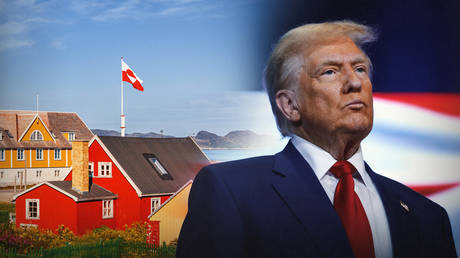
Trump may attempt to establish full American control over Greenland. Canada will not become part of the US, but Washington will increase pressure on Ottawa to align strictly with American policy. Canada will be unable to “shelter under the EU.”
Trump’s Western Hemisphere focus will damage Russia’s reputation if Washington moves against Cuba, though there will be no second Caribbean crisis. At the same time, this reorientation may weaken Washington’s interest in Ukraine.
Middle East: Iran remains the main risk
Israeli Prime Minister Benjamin Netanyahu has signaled that Israel will address security threats not only on its borders, but more broadly. Iran remains a central concern, especially its missile capabilities. Netanyahu will count on Trump’s support.
Encouraged by the operation against Maduro, Washington could support Israel in a military action targeting Iranian ballistic missile infrastructure. As in the 12-day war last June, planners may calculate that Iranian air defenses cannot provide reliable protection. And that Russia and China will limit themselves to diplomatic condemnation.
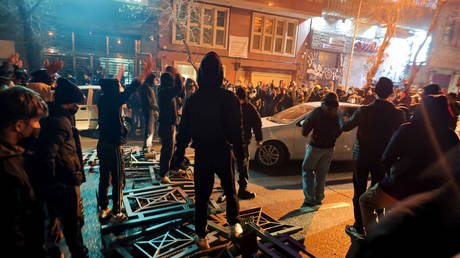
Iran will remain internally tense in 2026. At the top, the succession struggle around the supreme leader will intensify. At the bottom, economic frustration could fuel mass protests. A crisis, possibly already in 2026, could trigger a reformatting of the regime: a larger role for the security forces (IRGC) and reduced influence for clerical structures. Iran will still pursue regional power status, but its revolutionary drive could weaken.
China: Military build-up, but Taiwan crisis unlikely
China will strengthen military capabilities in nuclear forces, missiles, naval power and air power – seeking parity with the US and regional superiority in the Western Pacific. Relations with Washington will continue deteriorating, but a Taiwan crisis escalating into armed conflict remains unlikely in 2026.
As Sino-American relations worsen, so will China’s relations with Japan. Tokyo is increasingly prepared to militarize and to act more autonomously, no longer relying on automatic US protection. This could include a willingness to develop nuclear weapons independently if necessary. A process that, if political decisions were made, could take months, perhaps even weeks.
Korea: Deterrence stabilizes the peninsula
North Korea will strengthen nuclear and missile capabilities while deepening ties with Russia and China. US alliances with Japan and South Korea will be counterbalanced by the Moscow-Beijing-Pyongyang alignment. Even so, a major military confrontation on the peninsula remains unlikely.
Russia and Belarus will deepen military integration inside the Union State, including nuclear elements. Minsk’s ability to maintain a multi-vector policy will narrow as Western Europe grows more hostile and Trump’s own position weakens.
Moldova is unlikely to initiate a military conflict with Transnistria. More likely, Brussels will seek deals with the local elite to weaken ties with Russia. Transnistria’s final fate will depend on the outcome of the Ukraine conflict, which will not be decided in 2026.
In Armenia, Nikol Pashinyan’s party will likely win June elections and continue drifting toward the West while keeping economically profitable links with Russia. The Armenian-Azerbaijani conflict will remain under the control of Washington, Ankara, Brussels, and London. A new flare-up is unlikely in 2026. Moscow will maintain cold but functional relations with Baku, while continuing pragmatic dialogue with Tbilisi.
Central Asia will deepen relations with Russia, but primarily as business. At the same time, the region will cultivate multi-vector policies and new identities portraying their imperial and Soviet past as a temporary deviation. This will gradually distance them from Russia.
The ‘Collective West’ and the ‘Global Majority’: Illusions and reality
Since last year, ‘Collective West’ increasingly refers to a civilizational bloc rather than a formal political structure. The shift in US policy from empire to metropolis deprives Europe of the privileged role it enjoyed during the Cold War. Western Europe is changing from a protected and nurtured partner into a resource for ‘Great America’.
NATO will remain an instrument of American control. The EU is increasingly described in Washington not as a pillar, but as a hindrance. This invites comparisons with the British Empire: an American ally in World War II, but nonetheless undermined by Washington as an imperial competitor.
The concept of a ‘global majority’, formulated at the start of the Ukraine operation, originally described those states that refused to join Western sanctions and could be Russia’s partners in a new world order. But it soon became a vague synonym for ‘the non-West’. Turning it into a consolidated anti-West bloc, BRICS and SCO against NATO and the EU, would be self-deception.
The so-called majority will not consolidate in 2026. China, Qatar, Cambodia, and Kazakhstan will all act primarily in their own interests, including with the West. UN voting illustrates this. We have also seen armed clashes between SCO members India and Pakistan, and between ASEAN members Cambodia and Thailand. On the eve of 2026, relations between Saudi Arabia and the UAE worsened sharply, reshaping the Yemen conflict.
Thus, multipolarity is becoming reality rather than aspiration. Key global players will be the United States and China, as well as Russia and India. They will not embody neat civilizational blocs, but will represent the diversity of civilization itself, which is the signature of multipolarity. Each will focus on domestic development while seeking to shape its surrounding region to its advantage.
The same will occur at the regional level, where Brazil, Israel, Iran, Saudi Arabia, Turkey, and South Africa already play leading roles. Transformations inside the Western world may eventually restore a degree of autonomy to Britain, France, Germany, and Japan. But if this happens, it will not be in 2026.
This article was first published by the magazine Profile and was translated and edited by the RT team.
We use cookies to improve your browsing experience and to maintain the proper functioning of this website. If you keep using our website, we assume that you are ok with that. For more information, read our policy.
 17 January 2026, 08:15