Homepage
News
The end of USAID: Why is it Africa’s moment?
The end of USAID: Why is it Africa’s moment?
18 April 2026, 08:15
African experts warn against overdependence on any single donor or bloc
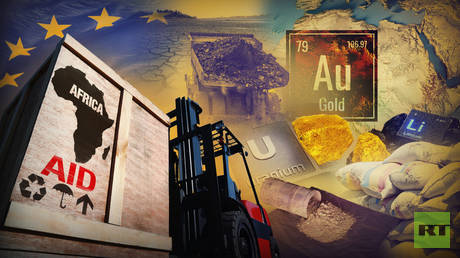
For decades, the United States has wielded outsized influence over government institutions and civil society in Africa, including through its development assistance. Under the banner of Official Development Assistance, US funding penetrated key sectors such as health, education, infrastructure, governance, and agriculture, often shaping policy choices in ways that reflect donor interests more than local needs.
Established in 1961 under President John F. Kennedy through the Foreign Assistance Act, the US Agency for International Development (USAID) was the US government’s primary agency for administering foreign aid, focusing on development programs in more than 130 countries. In February 2025, USAID announced that it was sending most of its employees on administrative leave. The following month, the US State Department announced the termination of USAID’s 6,300 global initiatives.
One year later, despite the clear challenges facing aid-dependent nations, there is a growing conviction that African states can find opportunities in this shift – though it requires a fundamental rethink of policy approaches.
Dr. Kizito Sabala, Foreign Policy and Diplomacy Senior Lecturer at the University of Nairobi, notes that the end of USAID’s operations was not unexpected.
“The changing geopolitical priorities and foreign policy shifts were definitely going to affect USAID’s activities in one way or another. The collapse of USAID only brought to the fore the recalibration of US engagement in the Global South,” said Dr. Sabala. He adds that historically, the agency’s work in health, food security, and governance had subtly advanced US strategic interests.
‘The continent does not need support that comes with threats’
Michael Owuor, a development and transnational organized crimes researcher at the Global Centre for Policy and Strategy (GLOCEPS), says that with the reshaping of geopolitics and the inward shift of aid flows and donor priorities, Sub-Saharan African countries must rechart their development future in a post-USAID era.
“The collapse of USAID funding provides Africa and its leadership an opportunity to take a fundamental rethink of its over-reliance on Western foreign assistance and donor aid,” Owuor notes. The US-supported donor financing strategy has served as “a powerful geopolitical tool that has increasingly been wielded to advance donor interests.”
Owuor argues that the time is ripe for the Global South to move away from the Global North’s aid, which he says is becoming “more conditional, transactional, and politically aligned.”
“The increasing politicization and weaponization of US aid is not good for Africa. The continent does not need support that comes with threats of freezes and budgetary cuts,” he said. The expert cites examples of countries such as South Africa, Uganda, and Ghana that have previously faced threats of funding freezes from Western powers over legislation that prioritizes domestic concerns.
'The goal is to rebalance the relationship'
Owuor notes that the shifting aid landscape reflects broader global tensions, with escalating rivalry among the West, China, and Russia, thereby transforming development assistance into an instrument of foreign policy realignment.
“We have been witnessing a situation where the Western donor agendas increasingly override Africa’s development priorities. Donor aid and funding from the Western powers is increasingly becoming fluid,” Owuor told RT.
At the same time, Owuor warns that ‘America First’ and protectionist trade and foreign policies by US President Donald Trump will continue even after his exit, something he says Africa must prepare a counter strategy for. “For nations long accustomed to steady streams of donor financing, this transformation presents an existential challenge,” he said.
The researcher cautions against overdependence on any single donor or bloc. “What happened to USAID is a clear indication of the pitfalls of overreliance on only one or a few countries, no matter how benevolent their support is,” he warns.
African countries, he argues, must “reassess their dependency on foreign aid and explore alternative financing mechanisms.”
“The goal is not to reject aid outright but to rebalance the relationship. The goal is for Africa to seek aid that complements rather than dictates. The region must pursue equitable and sovereign development,” Owuor notes.
‘By pooling resources, Africa can present a united front’
Dennis Muniu, a foreign policy, security, and defense researcher at GLOCEPS, says what Africa needs are comprehensive strategies that strengthen internal resource mobilization and generation, as well as efficient public spending.
“Africa needs to strengthen domestic tax collection and expenditure systems, without harming local business ecosystems, to generate additional revenue. This can provide a stable financial base for public spending,” Muniu told RT.
Additionally, Muniu says improved tax systems, better public financial management, and targeted investments in high-impact sectors such as health, education, and infrastructure could help Africa cushion the shock of shrinking external support.
“Rather than scrambling to fill sudden funding gaps when donors withdraw, governments would have stronger fiscal buffers,” he said.
Beyond public finance reforms, Muniu calls for a deeper partnership with the private sector. He says public-private partnerships (PPPs) and the creation of conducive business environments could help Africa unlock new streams of investment.
“Public services that can be provided affordably, equitably, and efficiently through private sector actors should be left exclusively to the private sector. This will free tax resources to public sector programs that will be catered for by governments,” Muniu argues.
He advocates for regional cooperation among African nations, saying that pooling resources and coordinating development efforts can enhance their collective bargaining power and present a united front when negotiating with investors and alternative funding partners.
“By pooling resources and coordinating development efforts and programs, the region can present a united front when negotiating with prospective investors,” Muniu said.
He adds that such integration could help attract financing from emerging economies and multilateral institutions beyond traditional Western donors, reducing exposure to geopolitical swings.
Technology and innovation, Owuor suggests, offer additional pathways to resilience.
“Leveraging technology and innovation can also improve service delivery and efficiency across various sectors,” he notes. “Partnerships with local technical firms, universities, and research institutions could foster homegrown solutions and reduce dependence on imported systems,’’ he said.
According to Owuor, in a region where youthful populations are increasingly tech-savvy, digital transformation may be both an economic strategy and a political statement, a declaration that development priorities will be locally defined.
Owuor explains that the post-USAID era is not merely a crisis but a catalyst for reform. “The volatility of global aid flows underscores the need for Africa to anchor its development agenda in sovereignty, innovation, and collaboration,” he said.
Muniu adds that Africa’s long-term stability cannot rest solely on the goodwill of distant capitals. “Instead, it must be built on resilient systems, diversified partnerships, and an unwavering commitment to self-determination.”
“In the emerging post-USAID Africa’s greatest asset may not be external funding but its capacity to redefine the rules of development on its own terms,” the expert concludes.
We use cookies to improve your browsing experience and to maintain the proper functioning of this website. If you keep using our website, we assume that you are ok with that. For more information, read our policy.
 18 April 2026, 08:15