 07 April 2026, 08:15
 The four astronauts of the NASA mission have ventured farther from Earth than any humans before them
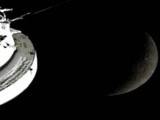
NASA’s Orion spacecraft, carrying four astronauts, performed its long-awaited lunar flyby, coming within roughly 4,070 miles (6,550 km) of the lunar surface and entering the Moon’s gravitational sphere of influence.
In a planned and highly anticipated phase of the journey, Mission Control in Houston lost contact with the crew at around 6:43 PM EST for approximately 40 minutes. The communication blackout occurred when the Moon blocked radio and laser signals between the Earth-based Deep Space Network and the Orion spacecraft.
While out of contact, NASA astronauts Reid Wiseman, Victor Glover, and Christina Koch, along with Canadian Space Agency (CSA) astronaut Jeremy Hansen, focused on their scientific objectives, photographing and observing the lunar far side – including the 600-mile-wide Orientale basin.
While the Artemis II crew are experiencing their own personal solar eclipse, Mission Control will temporarily lose communications with the capsule. This is planned and expected. We anticipate regaining communications in about 30 minutes. pic.twitter.com/QjeORjlfZB
— NASA (@NASA) April 6, 2026
The mission’s defining moment also saw the crew break a 56-year-old record, surpassing the 248,655-mile mark set by the Apollo 13 mission in 1970.
"We will always choose each other."
— NASA Artemis (@NASAArtemis) April 6, 2026
Mission control has reacquired signal with the Artemis II crew after the mission’s planned loss of signal. Our astronauts are once again using the Deep Space Network to keep conversation and science data flowing between space and Earth. pic.twitter.com/aagRApba1z
“On the far side of the Moon, 252,756 miles away, Reid, Victor, Christina, and Jeremy have now traveled farther from Earth than any humans in history and now begin their journey home,” NASA Administrator Jared Isaacman said in a statement on X.
“It is so great to hear from Earth again,” Koch said upon re-establishing communication with mission controllers. “We will visit again. We will construct science outposts. We will drive rovers. We will do radio astronomy. We will found companies. We will bolster industry. We will inspire. But ultimately, we will always choose Earth.”
READ MORE: Artemis II breaks record for farthest human travel from Earth
The flyby marks a crucial test for NASA as the agency prepares for future lunar landings, with the capsule now on a four-day return trajectory.
Do you like the page?
Would you like to share the page with your friends?